
4 Best Organic CBD Oils of 2026
How we ranked these
Ranked by what each brand says about organic labeling, sourcing transparency, and per-mg value.
We distinguish between 'made with organic ingredients' (lower threshold) and full USDA Organic on the finished product (highest threshold). This ranking keeps only brands whose copy says USDA Organic.
Refreshed October 10, 2026: we re-read the two round-ups that outrank this page for 'organic CBD oil' (Healthline's and Forbes Health's 2026 best-CBD-oil lists) and added the questions they answer that this page did not, on certification, ingredient lists, carrier oils, price and how to verify a claim. Competitor prices and per-mg figures in the entries below were not re-checked on this pass; where we quote a price in the FAQ we say whose page it came from and when.
- ✓What the brand says about USDA Organic, and whether a certifier is named
- ✓Named certifier on the label
- ✓Carrier oil named on the label
- ✓Batch COA with a pesticide panel
The ranking
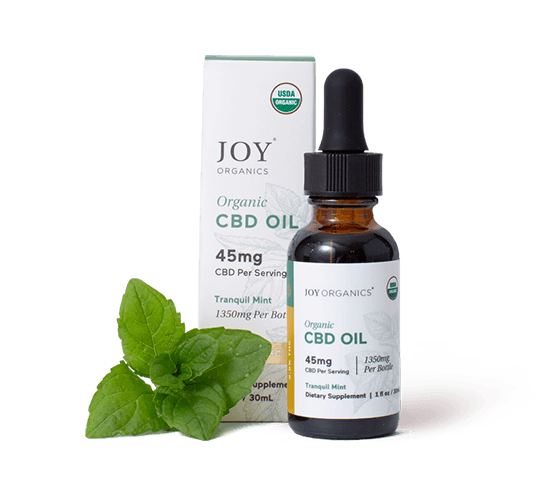
Joy labels its tinctures USDA Certified Organic (per joyorganics.com, checked October 2026). Premium pricing.
- Organic status
- Joy labels its tinctures USDA Certified Organic (per joyorganics.com, checked October 2026)
Cornbread combines USDA Organic certification with whole-flower-only sourcing. Premium pricing. Kentucky-grown. Family-owned.
- Certification
- USDA Organic
- Source
- Whole flower only
Aspen Green carries USDA Organic and describes the oil as vegan-friendly. Premium pricing.
- Certifications
- USDA Organic, vegan-friendly
This has changed since our last pass: Lazarus no longer stops at organically-grown hemp. Their tincture line is now sold as CBD Tincture and carries USDA Certified Organic status through Oregon Tilth, on hemp they grow themselves in Central Oregon.
- Hemp
- Company-grown, Central Oregon
- Certification
- USDA Organic (Oregon Tilth)
The bottom line
'Organic CBD' is a marketing claim with widely varying actual rigor. Cornbread Hemp and Aspen Green each carry a USDA Organic seal. Joy labels its tinctures USDA Certified Organic (per joyorganics.com, checked October 2026).
FAQ
What does 'organic CBD oil' actually mean?
Three things have to be true, not one: the hemp was grown without synthetic pesticides or fertilizers, the extraction used a method a certifier allows (CO2 or ethanol, not hydrocarbon solvents), and the carrier oil — usually MCT — is itself organic. A USDA Organic seal covers all three under a certifier's audit. 'Made with organic hemp' covers only the first. The quickest check is to ask the brand which farm grew the hemp and to read the pesticide panel on the batch's lab report.
Is organic CBD oil THC-free?
Not necessarily. Organic describes how the hemp was grown and processed; THC content depends on the extract type. An organic full-spectrum oil carries trace THC (under 0.3%) by design, while an organic broad-spectrum oil has the THC removed. botanCBD doesn't make drug-test claims. Any CBD product can contain trace cannabinoids; if you're tested, talk to your employer or testing program before use.
Is USDA Organic the highest organic CBD standard?
USDA Organic on the finished product is a federally regulated, third-party-verified standard. 'Made with organic ingredients' or 'organically grown' are weaker claims that still mean something but aren't equivalent.
Does organic CBD work better than non-organic?
The cannabinoid molecule itself is the same. Organic matters for what's NOT in the oil — no pesticides, no heavy metals from soil contamination, no synthetic fertilizer residues. Per-batch COA testing catches contaminants regardless of organic certification.
Is organic CBD oil USDA certified organic?
Only when the label carries the USDA Organic seal and names the certifier underneath the maker's name. Hemp has been eligible for certification since the 2018 Farm Bill, and the certifier inspects the farm and every handler after it, including extraction and the carrier oil. A bottle that says 'organic' in its name or 'organically grown' in its copy without a seal is describing farming practice, which may be honest but has no outside check behind it. botanCBD isn't USDA Organic certified; our hemp is grown on partner farms in Kentucky and Ohio. Cornbread Hemp, Aspen Green and Lazarus Naturals carry a USDA Organic seal on this list. Joy labels its tinctures USDA Certified Organic (per joyorganics.com, checked October 2026). We wrote the full distinction up in USDA Organic vs organic-grown CBD, and the glossary entry on USDA Organic for hemp and CBD covers the rules in brief.
What should the ingredient list on an organic CBD oil look like?
Short. The oils the two biggest round-ups single out for clean formulation list two ingredients: organic hemp extract and an organic carrier oil, usually MCT from coconut. Forbes Health's 2026 list, read October 10, 2026, names Cornbread Hemp's whole-flower oil for exactly that two-line label, and Healthline's 2026 list notes that most of its picks use MCT oil and flags it for anyone with a coconut allergy; one of its picks (NuLeaf Naturals) uses organic virgin hempseed oil as the carrier instead. If you avoid coconut, pick a hempseed-carrier oil and read the ingredient line, not the front of the bottle.
Is organic full spectrum CBD oil different from organic broad spectrum?
Organic describes how the hemp was grown and handled. Full spectrum and broad spectrum describe what is left in the extract, so an oil can be both organic and either one. Organic full spectrum CBD oil keeps the hemp plant's trace THC, under 0.3% by law, along with its minor cannabinoids and terpenes. Organic broad spectrum has the THC removed and the rest kept. The spectrum line and the seal are separate checks.
How much does organic CBD oil cost?
More than the category average at the same bottle size, but the spread is wide. Forbes Health's 2026 round-up, audited October 7, 2026 and read October 10, lists manufacturer prices for its organic-labeled 30 mL oils from $49.99 (Cornbread Hemp, 25mg per mL) and $64.99 (Extract Labs, 50mg per mL) up to $149.99 (Aspen Green, 133mg per mL); by our arithmetic on those listed figures that is roughly $0.037 to $0.067 per mg. Whatever the price, divide it by the total milligrams on the label before you compare, because a cheap bottle with few milligrams costs more per serving.
How do I verify an organic claim before I buy?
Four checks, in order. Look for the USDA Organic seal and a certifier's name on the label. Search the brand or certifier in the USDA Organic Integrity Database, a free public listing, and confirm the certificate covers the product, not just the farm. Open the batch lab report and read the pesticide and heavy-metal panels, because organic means approved inputs rather than zero inputs, and the report is what proves the bottle is clean. Then read the ingredient list for a carrier oil or flavoring that is not organic. If a brand says organic and shows no seal, no certifier and no report, read the word as a description, not a certification. COA available on request, and our how to read a CBD COA guide shows where the pesticide panel sits on one.
Related rankings
Keep exploring
- New to CBD? Start herePlain-English basics before you buy anything
- How to read a CBD COAND vs <0.3%, batch numbers, what a real report shows
- Best CBD for your situationPersona guides: runners, parents, seniors, pets
- How to choose mint CBD oilToothpaste vs cool mint, and when citrus is the better first bottle
- Full spectrum under 0.3% THCFarm Bill hemp, labeling honesty, when THC-free is the bottle
These statements have not been evaluated by the Food and Drug Administration. botanCBD products are not intended to diagnose, treat, cure, or prevent any disease. Talk with your healthcare provider before starting any new wellness product, especially if you take prescription medications.